




Classic three-reel machines feel transparent: a compact grid, recognizable fruit and bar symbols, and a few straight paylines. Despite their simplicity, the core engine is identical to that of video slots: a random number generator selects reel stops independently for every spin. The compact layout often means fewer symbols and fewer total combinations, but the unpredictability is the same. No sequence of losses or near-misses increases the chance of a hit on the next spin.
How RNG maps to outcomes
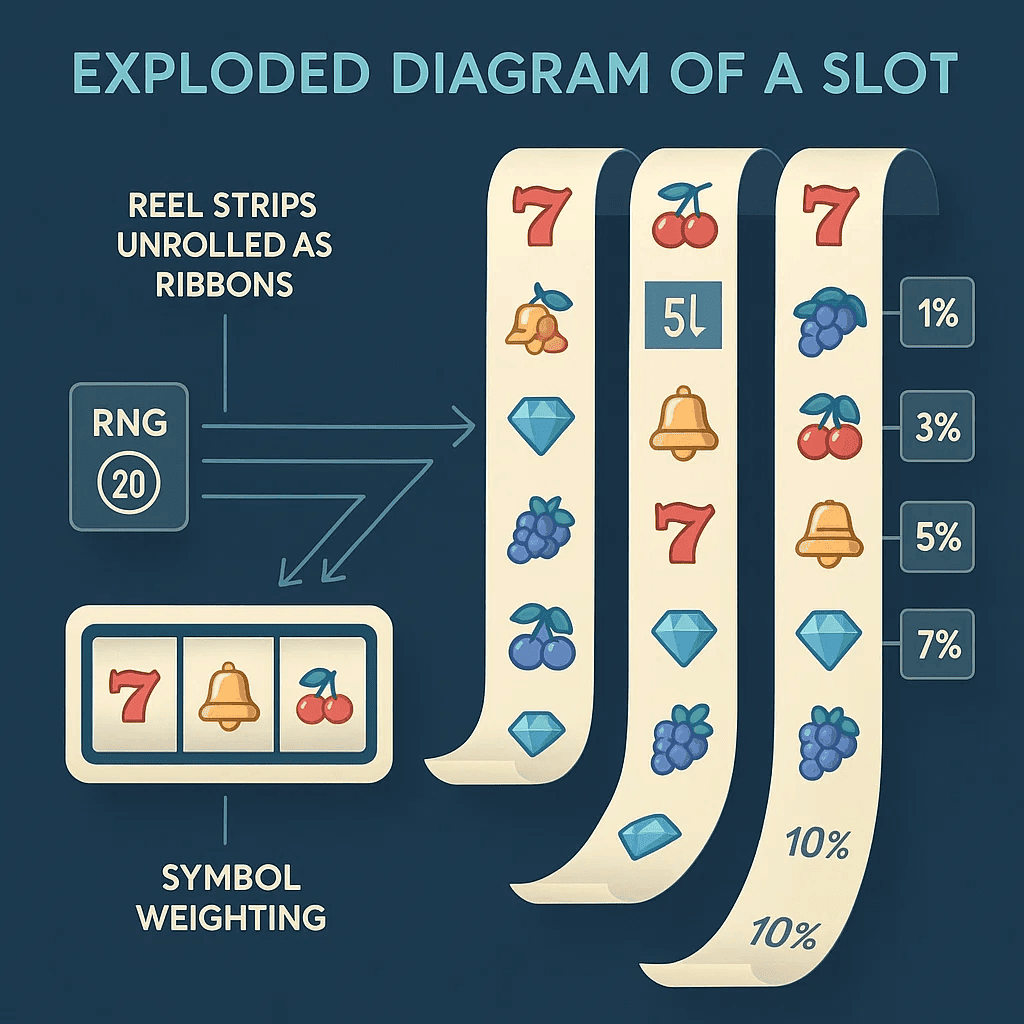
The RNG produces numbers that correspond to positions on each reel strip. Each strip contains repeated and weighted symbols, some frequent, others rare. The mapping, not the animation, decides what you see. Because weighting differs across reels, the top symbol can be extremely rare in aligned positions, which is why single-line jackpots on classic cabinets can be elusive even at modest RTP.

Video slots: more space for features, not less fairness
Modern five- or six-reel games add rows, symbols, and mechanics, from wild modifiers to hold-and-spin bonus rounds. Cascading wins clear matching symbols and drop new ones, allowing multiple evaluations from one paid spin. Free-spin modes may introduce progressive multipliers or expanded grids. All of this rides on the same RNG foundation. Features don’t bypass randomness; they structure when and how return is delivered. A title may allocate much of its RTP to a rare bonus, creating long low-event stretches punctuated by occasional bursts.
Volatility in classic and modern designs
Volatility isn’t about graphics, it’s about distribution. A three-reel setup can be low volatility (frequent bars and cherries paying small amounts) or surprisingly high (few lines, top-heavy paytable). Similarly, a video slot can be tuned for gentle base-game taps or for droughts that lead to high-multiplier free spins. Developers choose symbol weights, line counts, and feature frequency to hit a target volatility profile.
RTP misconceptions and practical checks
RTP is a statistical expectation over massive samples. A 95% three-reel game and a 95% video slot are equally “generous” in the long run; they just feel different due to volatility. Before playing, open the information screen: look for payline count or ways-to-win, feature triggers, bet limits, and any note about multiple RTP versions. If a demo exists, use it to gauge pace and typical hit size.
Bankroll guidelines that work across formats:
- Set a session budget and stick to it. Randomness can swing quickly in either direction.
- Match bet size to volatility. Smaller bets prolong play on high-volatility titles while you wait for features; slightly larger bets can make low-volatility games feel meaningful.
- Avoid pattern chasing. Near-misses and streaks are vivid but not predictive.
- Decide exit rules. A profit target and a stop-loss cap remove on-tilt decisions.
Why “simple” doesn’t mean “beatable”
Three-reel nostalgia suggests mastery through observation. In reality, the RNG removes trackable cycles. Symbol frequency can be inferred from the paytable and win rate, but you cannot predict the next stop. The best you can do is choose the experience you enjoy: steady small hits or swingy, feature-driven spikes and play within limits.
Conclusion
Whether you spin a minimal three-reel cabinet or a feature-packed video grid, an RNG decides each outcome and keeps games fair and unpredictable. The difference you feel comes from paytable shape, line structure, and how much value is parked in the bonus. Learn the basics, choose volatility that fits your appetite, and treat every spin as an independent roll of the dice.